
Artificial Neural Networks
for Marketing
How brain-inspired computing models are transforming the way marketers extract insight, identify patterns, and make smarter decisions from large data sets.
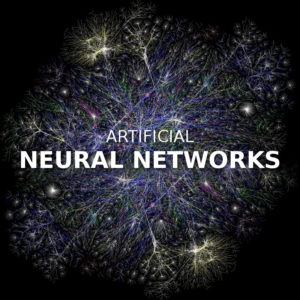
Artificial neural networks are progressive learning systems modeled after the human brain. They continuously improve their function over time, extracting relevant patterns from large data sets, identifying trends and relationships, and applying past outcomes to determine the best course of action.
For marketers, they represent a fundamental shift in how decisions get made — from intuition backed by limited data to inference backed by continuous learning.
How Neural Networks Work
The human brain consists of roughly 100 billion cells called neurons, connected by synapses. When enough synaptic inputs fire simultaneously, the receiving neuron fires too. That process, at its most basic, is thinking.
Artificial neural networks replicate this logic in software. They don't attempt to model the molecular complexity of the brain — they borrow its higher-level rules. A network consists of interconnected artificial neurons that each receive inputs, apply a weight to those inputs, and pass a summed result through an activation function to the next layer.
Every network contains three core components: an input layer, one or more hidden layers, and an output layer. The term "deep learning" refers specifically to architectures with multiple hidden layers. Through repeated trial and error, the network learns which signals matter and which don't — amplifying influential data and discarding noise.
Practical Applications
Neural networks are already embedded in systems most people use every day. Common applications include character recognition, image classification, speech recognition, and facial recognition. Beyond perception tasks, they power predictive analytics — forecasting outcomes based on historical patterns with a level of accuracy that rules-based systems cannot match.
For a deeper look at how leading technology companies are deploying these systems, see our article on how leading technology companies are using artificial intelligence and machine learning.
Market Segmentation
Neural networks identify natural groupings within customer data — behavioral patterns, purchase signals, and engagement clusters — with a precision that traditional segmentation models cannot reach.
Forecasting & Predictive Analysis
By learning from historical outcomes, networks can predict future customer behavior, campaign performance, and demand shifts — allowing marketing teams to act before trends become obvious.
Pattern Classification
Networks detect relationships and cause-and-effect connections across disparate data sources — linking CRM records, campaign data, and behavioral signals into a unified picture of customer intent.
The Advantage Over Traditional Models
"Neural networks don't require you to define the rules in advance. They find the rules themselves — and improve every time they process new data."
Traditional marketing analytics models rely on predefined logic. A human analyst decides what variables matter, builds a model around those assumptions, and runs it. If the assumptions are wrong, the model is wrong.
Neural networks invert this. They begin without assumptions and discover structure in the data through learning. Their flexibility, adaptive capacity, and knowledge discovery make them more accurate over time — not less. The more data the network processes, the sharper its predictions become.
This translates directly to lower operational costs, improved targeting accuracy, and the ability to apply learned patterns to new situations without rebuilding the model from scratch.
Data Input
Raw data enters the network through the input layer. Each data point is assigned an initial weight reflecting its estimated relevance.
Hidden Layer Processing
Weighted inputs are summed and passed through an activation function. Hidden layers detect increasingly abstract patterns at each stage.
Output & Error Measurement
The network produces an output, which is compared against known outcomes. The gap between prediction and reality generates an error signal.
Weight Adjustment
The error signal propagates backward through the network, adjusting weights to reduce future errors. This cycle repeats until accuracy reaches an acceptable threshold.
The Bottom Line
Neural networks are not a future technology. They are a current capability, already embedded in the tools marketers use daily. The organizations gaining ground are those treating them as infrastructure — building systems that learn continuously rather than models that require constant manual recalibration.
The shift from rules-based marketing to learning-based marketing is underway. The question is not whether neural networks will reshape how decisions get made. It's whether your organization is positioned to benefit.
The marketers who will lead the next decade are those who understand that better data plus smarter systems equals decisions that compound over time.
Related reading: How Leading Technology Companies Are Using Artificial Intelligence and Machine Learning — BriteWire Editorial.