
How Netflix Uses Data
to Greenlight Hits
Netflix doesn't guess what audiences want. It knows. Here's how the company turned viewer behavior data into one of the most strategically produced shows in television history.
Netflix collects data at a scale the entertainment industry had never seen before — and uses it in ways the industry had never considered. Not to optimize ads, not to improve search rankings, but to decide what to make next.
That shift, from data as a reporting tool to data as a creative input, changed everything. House of Cards was the proof of concept.
The Scale of What Netflix Sees
At the time Netflix made its move into original content, it was the world's leading internet television network — over 57 million members across nearly 50 countries, consuming more than two billion hours of TV and film every month.
That volume of engagement generates an extraordinary amount of behavioral signal. Netflix logged over 40 million plays per day, tracking not just what was watched but how it was watched. Every pause, rewind, fast-forward, and early exit was recorded. The time of day, the device used, and how far into a series a subscriber progressed before abandoning it — all captured.
Combined with verified account data including age, location, viewing history, bookmarks, and social preferences, Netflix had built something rare: a deep, accurate picture of what its audience actually wants, not what they say they want.
The House of Cards Decision
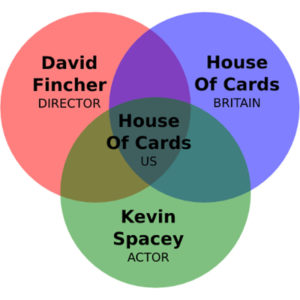
Netflix's data revealed a specific and significant overlap: subscribers who had watched the original BBC miniseries House of Cards also showed strong affinity for films starring Kevin Spacey and films directed by David Fincher. Three distinct signals, pointing at the same audience.
That overlap was the greenlight. Netflix commissioned a full series remake with Spacey and Fincher attached — not on instinct, not on a development executive's hunch, but on evidence. It was a data-driven creative bet, and it paid off.
Behavioral Data at Depth
Netflix didn't just track what users watched — it tracked how they watched. Pause points, rewind frequency, drop-off moments, and session timing all fed into a model of genuine engagement, not just consumption.
Audience Overlap as Strategy
The Venn diagram of BBC drama fans, Kevin Spacey fans, and David Fincher fans produced a clear, overlapping audience segment with demonstrated appetite for exactly the kind of content Netflix was considering making.
Content as a Data Product
House of Cards became the most streamed piece of content in the United States and 40 other countries. Rated 9.1/10 by over 180,000 users on IMDB, it validated the premise that data-led creative decisions can produce culturally significant work.
What Comes Next
"Knowing what viewers watch is just the beginning. Knowing how they respond to color, pacing, volume, and scene composition is a different level entirely."
Correlating fan bases was only the first layer. At a 2012 Hadoop Summit conference, Netflix senior data scientist Mohammad Sabah revealed the company was already capturing specific screenshots to analyze in-the-moment viewing habits — and exploring additional signal types beyond raw play counts.
Reporting on the presentation, GigaOm speculated that future analysis could incorporate visual and audio attributes: volume levels, color palette, scene composition, and pacing — signals that might reveal not just what viewers choose, but what keeps them engaged moment to moment.
In any business, predicting which products will succeed is one of the most valuable capabilities a company can build. Netflix is demonstrating that, at sufficient scale, behavioral data makes that prediction less of an art and more of a science.
Collect Behavioral Signal
Every interaction — plays, pauses, rewinds, exits, device type, time of day — is logged at scale across tens of millions of daily sessions.
Identify Audience Overlap
Behavioral clusters reveal where audience segments converge. Shared affinity across content types, talent, and genre becomes a strategic signal.
Make the Creative Bet
Content decisions are made with data as a primary input — not a supporting footnote. The brief, the talent, and the format are all informed by what the numbers say.
Measure and Refine
Post-release engagement data feeds back into the model, tightening future predictions and expanding the kinds of signals Netflix can act on.
The Bottom Line
Netflix didn't stumble into original content. It made a calculated, evidence-backed decision at every stage of the House of Cards production. The data didn't replace creative judgment — it informed it, constrained the risk, and pointed the team at an audience that was already waiting.
That model is replicable. Any organization with sufficient behavioral data and the analytical infrastructure to interrogate it can apply the same logic to its own product decisions.
The question is no longer whether data should inform creative decisions. The question is whether you have the data infrastructure to make it possible.
Source: Netflix Tech Blog — Mohammad Sabah presentation, Hadoop Summit 2012.