
Targeted Marketing
Models
Targeting the best prospective customers within markets that have the highest probability of success establishes clear marketing goals that can be accurately measured by customer acquisition and sales conversion.
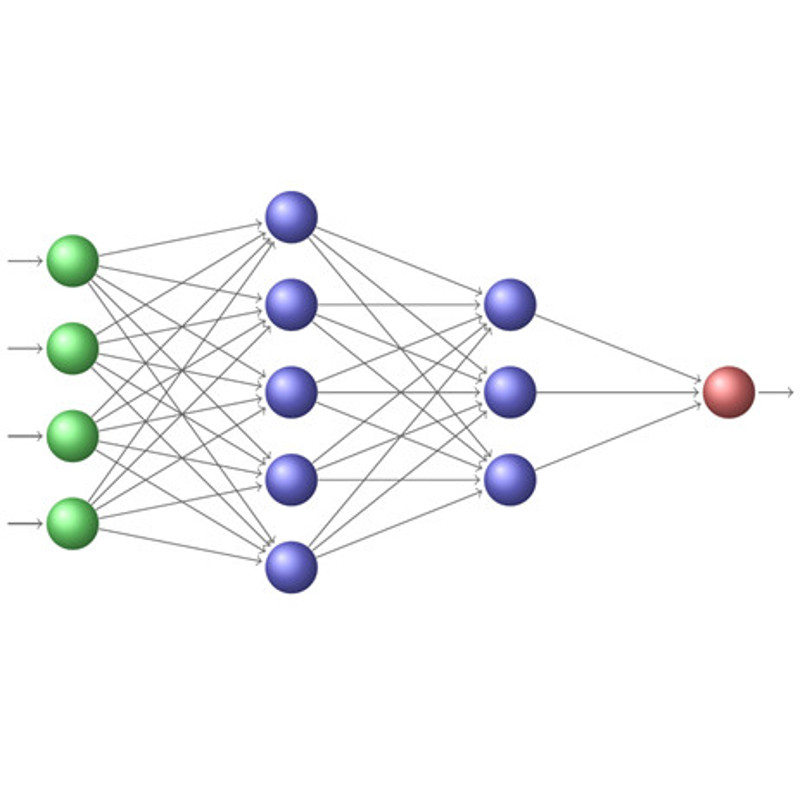
In a previous post we covered Marketing Uplift & Predictive Modeling. This post builds on that foundation — combining Predictive Modeling and Marketing Uplift with classic Customer Analytics to create more accurate, more measurable targeted marketing campaigns.
The result is a system that doesn't just tell you who bought — it tells you who will buy, where to find them, and exactly what to say.
The Foundation: Defining Your Core Customer
The foundation of any accurate marketing model is a precise definition of your core customer. Without this, even the most sophisticated analytics tools are pointing in the wrong direction. A complete core customer definition encompasses four key dimensions.
Who They Are
A precise profile of your best existing customers — demographics, behaviors, purchase history, and lifetime value.
Where to Find Them
The geographic, digital, and psychographic locations where your best potential customers can be reached most efficiently.
What Resonates & When
The specific messages, offers, and creative treatments that drive response — and the optimal timing to deliver them.
Their Value Potential
The projected value of each customer segment — measured in revenue, visits, or lifetime engagement — to prioritize investment.
What Customer Analytics Adds
Customer analytic solutions have traditionally been used to gather customer insights across these data dimensions. But analytics alone only tells you what has happened. The real power comes when you combine customer analytics with a properly defined marketing model.
That combination does two things simultaneously: it accurately quantifies the benefit of your marketing programs, and it builds a progressively deeper definition of your core customer over time — sharpening with every campaign cycle.
Predictive Modeling in Practice
Predictive Modeling can be used to understand the potential benefit of a new marketing program before it is launched — helping you determine whether it's a sound investment or a risk not worth taking.
Once a program is live, the same modeling can be applied to optimize performance. By establishing key metrics and analyzing them continuously, you can identify which programs are not meeting their potential and determine the gap between actual performance and ultimate potential.
Correlating this marketing data with known customer dimensions allows you to refine your Core Customer Profile — making every subsequent campaign more precise than the last.
"The ability to measure, analyze, and assess existing programs identifies which aren't meeting potential — and defines exactly what it would take to close the gap."
Define the Core Customer Profile
Use existing customer data to build a precise demographic and psychographic baseline — who buys, why, and how often.
Apply Predictive Modeling
Model new programs against the profile before launch to forecast ROI and prioritize the highest-probability opportunities.
Launch & Measure
Execute the campaign with clear, measurable KPIs tied directly to customer acquisition and sales conversion.
Analyze the Gap
Compare actual performance to modeled potential. Identify which programs are underperforming and quantify the upside available.
Reprioritize & Refine
Shift budget from low-upside initiatives to underperforming ones with proven potential. Refine the customer profile with each cycle.
From Data to Action
When customer analytics and marketing models are working together, something powerful becomes possible: a focused demographic and psychographic profile of exactly the customers worth targeting — and a measurable campaign built to go after them.
This means knowing not just who your core customers are, but where potential core customers are located within an underperforming market area, what messages they respond to, when they're most receptive, and the precise value each of those customers represents.
The result is marketing that isn't guesswork. It's a system — one that improves with every campaign because the data compounds.
The Bottom Line
Most marketing programs fail not because the product is wrong or the creative is weak — but because they're aimed at the wrong audience, at the wrong time, with the wrong message. Targeted marketing models exist to solve exactly that problem.
BriteWire sends the right message, to the right customer, at the right time.
This post is part of BriteWire's series on marketing analytics and predictive modeling. Related reading: Marketing Uplift & Predictive Modeling.