
The Decline of
Facebook Usage
Across every age group, every demographic, and every platform metric, Americans are spending less time on Facebook. The decline is not a trend confined to one segment. It is happening everywhere at once.
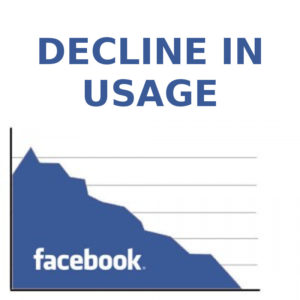
If you have found yourself spending less time on Facebook over the past year or two, you are not alone. Users across every studied age group and demographic are logging on less frequently, engaging less when they do, and in many cases leaving the platform behind entirely. The decline is not concentrated among any one segment. It is broad, consistent, and measurable.
The data tells a story that Facebook's own behavior confirms. The company's decision to stop disclosing detailed engagement metrics for its main app, and its accelerating pivot toward private interactions, suggests leadership understands that the publicly visible numbers no longer reflect favorably on the platform's health.
What the Numbers Show
A Bank of America report citing data from research firm Sensor Tower found that combined downloads of the Facebook and Instagram apps fell 13 percent year over year in the third quarter of 2019. Facebook's own downloads declined 15 percent, while Instagram dropped 9 percent. That Instagram, long assumed to be the growth engine compensating for Facebook's user losses, was also in decline removed the last comfortable narrative about the Facebook ecosystem's overall trajectory.
The American Customer Satisfaction Index reported that Americans recorded their lowest satisfaction scores with Facebook since 2015 following the Cambridge Analytica data privacy scandal in 2018. The ACSI found that Facebook trails every other major social media platform in user satisfaction by what it described as a wide gap. The dissatisfaction is not limited to privacy concerns. It extends to site functionality, advertising quality, and the relevance of content in the News Feed, where Facebook rates worst in class among social platforms studied.
Users also report finding Facebook advertising more intrusive than on other platforms. In two new ACSI measurement categories covering photo and video upload ease and news feed content relevance, Facebook placed last in both. eMarketer projected that engagement with Facebook would decline or remain flat for the foreseeable future. That forecast was made before several subsequent rounds of negative coverage arrived.
Three Forces Driving the Decline
The falling usage numbers are not the result of a single event or a single category of complaint. They reflect the compounding effect of three distinct forces that have been building simultaneously and reinforcing each other over several years.
Eroding Trust
The Cambridge Analytica scandal put Facebook's data practices under sustained public scrutiny, and the coverage has not relented. The platform's role in the spread of misinformation, its handling of user data, and repeated episodes that raised questions about the company's accountability have created an environment where users are no longer confident that Facebook's interests align with their own. When a platform holds access to personal photos, communications, and behavioral data, a drop in trust translates directly into a drop in willingness to share and engage.
Exhausting Discord
Many users who have reduced their Facebook activity cite the same reason: the platform has become an unpleasant environment to spend time in. The pronounced political polarization of recent years found a natural home in a News Feed algorithm that amplified conflict and outrage because those responses drove engagement. Expressing any opinion on Facebook increasingly means defending it against people who were once simply friends. That dynamic is tiring in a way that makes opening the app feel like a cost rather than a benefit.
Cultural Disinterest
Social media platforms behave like fashion in at least one important respect: popularity can erode faster than it accumulated. MySpace was dominant and then it was not, with no single catastrophic event explaining the transition. Something similar appears to be underway with Facebook, particularly among younger users for whom the platform carries the social baggage of being their parents' network. Platforms that feel dated lose usage gradually, then all at once, as the social reinforcement that once made them the default choice shifts elsewhere.
Platform Fragmentation
Facebook's original value proposition was consolidation: one platform where you could do a wide range of social things. That breadth has become a liability as specialist platforms have emerged that do individual things better. Facebook is not the best platform for video, not the best for photos, arguably not the best for messaging, and no longer the default for staying in touch with younger audiences. Users who want to do any one of those things specifically now have better alternatives. The all-in-one advantage that once made Facebook indispensable has been eroded from every direction at once.
What This Means for the Facebook Ecosystem
"The drop in usage is seen in every age and gender demographic. It is not as if only young people, or only older Americans, are using Facebook less. Every studied group is using Facebook less."
Some of the shift in Facebook usage is internal to the company's ecosystem. Users spending less time on Facebook's main app may be spending more time on Instagram, WhatsApp, or Messenger. Facebook's acquisition strategy was partly designed to capture exactly this kind of platform switching, ensuring that users who left one property would be retained within another. Whether that strategy will hold as Instagram also shows declining download trends is a more complicated question than it appeared two years ago.
The more significant change for most users is probably not full departure from Facebook but a reduction in frequency. The shift from daily use to checking in a few times per week represents a significant reduction in total engagement even without anyone formally deleting their account. It is also the harder pattern for Facebook to reverse, because users who have broken the daily habit are unlikely to rebuild it without a compelling reason, and the company is currently generating more reasons to use it less.
For marketers, the declining engagement has compounding implications beyond the organic reach problem that has been developing for years. A platform where users are spending less time, trusting the environment less, and finding the advertising more intrusive than on competing platforms is a less effective advertising medium regardless of the audience size it can claim.
Track Engagement, Not Just Reach
A platform with declining user engagement is delivering fewer quality impressions even if the claimed audience size stays large. Monitor engagement rates on your Facebook content over time. A trend of declining engagement is a more meaningful signal than a static audience count.
Watch the Instagram Trend Separately
Instagram's declining download numbers suggest the Facebook ecosystem's problems are not contained to the flagship app. Evaluate Instagram performance data independently and apply the same scrutiny to its metrics that the video view fraud case suggested was warranted for Facebook's reporting.
Evaluate Where Your Specific Audience Is Moving
Platform fragmentation means different audiences are shifting to different destinations. The channels gaining time from users leaving Facebook vary significantly by age group and interest category. Understanding where your specific audience is increasing its attention is more useful than tracking Facebook's overall usage decline.
Reduce Dependence on Any Single Platform
The MySpace trajectory is a real precedent. A platform's dominance can erode faster than most observers anticipate once the social reinforcement that sustains it starts to weaken. Distributing audience investment across multiple platforms and owned channels reduces the risk of a single platform's decline affecting your entire reach strategy.
Build Owned Audience Assets
Email lists, website traffic, and direct customer relationships are not subject to the usage patterns or algorithmic changes of any social platform. The decline of Facebook engagement is a useful reminder that audience built on platforms you do not control can erode without warning and without recourse.
The Honest Answer on Where This Goes
Facebook is not going to disappear in the near term. It has two billion accounts, substantial infrastructure, and a portfolio of properties that extends well beyond its flagship app. The company also has the financial resources and the regulatory relationships to defend its position against most competitive threats. A platform in decline is not the same as a platform that is finished.
What is more likely than a sudden collapse is a continued, gradual reduction in the quality of engagement the platform can deliver for both users and advertisers. A platform where trust has eroded, where the experience has become less enjoyable, and where usage frequency is declining across every demographic is still a large platform. It is simply a less effective one than it was, and the gap between what it was and what it is now appears to be widening rather than stabilizing.
The Bottom Line
Every studied demographic is using Facebook less. Downloads of both Facebook and Instagram are declining. User satisfaction scores are at multi-year lows across every measured dimension. Engagement is flat to declining according to independent forecasts. These are not signals from a single survey or a single quarter. They represent a consistent direction across multiple independent data sources over multiple years.
We are not writing Facebook off entirely. We are adjusting expectations to match what the data shows rather than what the platform's self-reported metrics claim.
The platform that made sense as a primary social media investment five years ago is a different platform today in terms of the engagement quality and audience trust it can genuinely deliver. Strategies built on current evidence will outperform strategies built on outdated assumptions about what Facebook is and how its users actually behave.
Platform usage shifts; your marketing system shouldn’t collapse when it does. A diversified online marketing strategy — email, social, and campaigns working together — keeps your brand resilient.
BriteWire is a digital studio based in Bozeman, Montana. We design and build websites, brand identities, and digital systems for clients who care about quality.